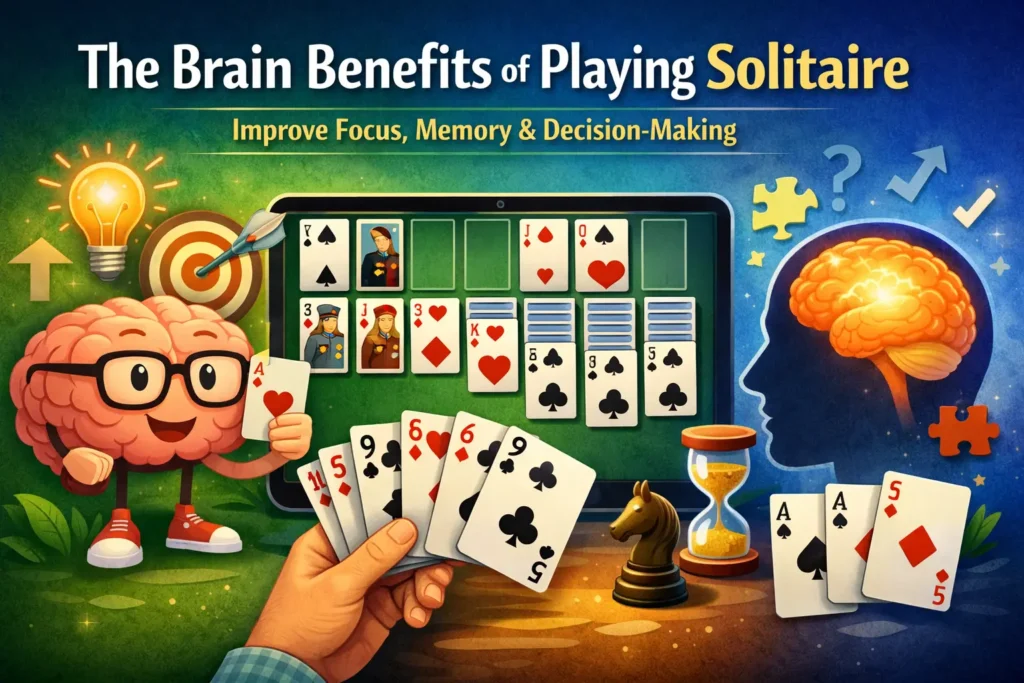
We often think of brain training as complex puzzles or expensive apps, but one of the most effective mental workouts has been hiding in plain sight—or rather, on our digital screens—for decades. That simple game of free online solitaire you play during your coffee break does far more than pass the time. It’s a powerful tool for sharpening your mind, improving your memory, and honing your decision-making skills.
Research and experience show that engaging in strategic card games like solitaire online provides real, measurable cognitive benefits that extend far beyond the game itself. Here’s how making this classic card game solitaire a daily habit can transform your mental fitness.
Why Our Brains Love the Solitaire Puzzle
Remember the last time you tried to remember where you left your keys? Or found your mind drifting during an important meeting? Our modern world is designed to fragment our attention. We jump between tabs, notifications, and half-formed thoughts. Solitaire online does the exact opposite—it demands singular focus. It’s a cognitive oasis.
Neuroscientists talk about something called “flow state”—that perfect zone where challenge meets skill, and time seems to disappear. A good game of free online solitaire is a direct ticket to that state. There’s just enough pattern recognition to engage your logic, just enough randomness to keep you guessing, and a clear, satisfying goal: build those four foundation piles from Ace to King.
The Real-World Benefits of Your Daily Game
1. Regaining Your Ability to Focus (Like Finding a Lost Muscle)
My friend Sarah, a graphic designer, started playing free solitaire during her afternoon slump. “It’s like a reset button,” she told me. “After ten minutes of sorting virtual cards, I can return to my design work with fresh eyes. I’m not fighting distractions as much.”
She’s experiencing what researchers call “attention restoration.” Unlike the exhausting, multi-tasking attention our jobs often require, solitaire demands sustained, gentle focus. You’re not frantically switching between tasks—you’re following a single thread of logic. This trains your brain’s attention “muscle” to stay on one path, a skill that then carries over to your work, reading, or conversations.
2. A Memory Workout That Doesn’t Feel Like Work
I used to play just by moving obvious cards, but then I started trying a simple trick: I’d pause for a second before drawing new cards and try to remember what was already buried in the tableau. Was there a black six under that red Queen? Had I already played the King of clubs?
This tiny act of active recall is a powerful memory exercise. Unlike rote memorization, you’re holding and manipulating information (which cards are where, what moves are possible) in your mind’s workspace. It’s the cognitive equivalent of juggling. Over time, I’ve noticed I’m better at remembering grocery lists, following multi-step instructions, and even recalling names—all from practicing with a deck of digital cards.
3. Better Decisions, One Move at a Time
Life’s big decisions can feel paralyzing. Solitaire offers a safe space to practice decision-making under constraints. Every move is a small choice with clear consequences. Do I uncover this hidden card now, or do I keep this column intact for a potential future move?
The beauty is the instant, non-judgmental feedback. Make a suboptimal move, and the game simply gets harder. Make a smart sequence of moves, and pathways open up. This daily practice in tactical thinking has made me a more patient and strategic decision-maker in real life. I’m more likely to think two steps ahead and consider alternate options before committing.
Beyond the Brain: The Quiet Joy of a Completed Game
There’s a quiet, personal satisfaction in seeing those four suits stack up neatly. In a world of endless inboxes and moving goalposts, solitaire online offers a rare thing: a definitive finish. You either solve the puzzle or you don’t. That moment of completion, of creating order from chaos, delivers a genuine little hit of dopamine—the brain’s “reward chemical.”
It’s a mindful break, a digital deep breath. It’s not about escaping reality, but about returning to it with a clearer, calmer mind.
How to Play with Intention: Making Your Game Count
To turn your game from a pastime into a brain-boosting ritual, try these mindful approaches:
- The Three-Second Pause: Before you make any move, especially drawing from the stock pile, pause for three seconds. Scan the entire tableau. This tiny habit breaks autopilot play and actively engages your planning brain.
- Embrace the Unwinnable Game: Sometimes, the cards just don’t come out right. Instead of getting frustrated, view it as a lesson in graceful acceptance. Shuffle and start anew. It’s a five-minute lesson in resilience.
- Track Your Streaks, Not Just Your Wins: Notice when you’re “in the zone”—those days when you win several games in a row. What’s different? Are you more rested? Less distracted? You might discover what conditions help your brain perform at its best.
Finding Your Perfect Digital Deck
A big part of the pleasure is finding a free solitaire platform you enjoy. You want clean graphics, smooth dragging action, and a sense of calm. A cluttered, ad-heavy site defeats the whole purpose of a focused mental break. Look for a place where the experience feels smooth and the design doesn’t fight you. The right digital table should feel inviting, not overwhelming.
A Final Thought: Your Brain’s Daily Playground
We invest in gym memberships for our bodies and courses for our careers. Isn’t it wonderful that one of the best tools for our minds is completely free, takes just minutes a day, and is hidden in a game most of us already know?
So the next time you have five minutes, open a game of solitaire online. Don’t think of it as wasting time. Think of it as a short session in your personal cognitive gym. You’re not just moving cards—you’re organizing thoughts, strengthening focus, and giving your memory a joyful little run. And you might just find, as I have, that you return to the real world feeling just a bit sharper, calmer, and more collected.
Now, if you’ll excuse me, I have a date with a deck of cards. My brain is ready for its morning stretch.